
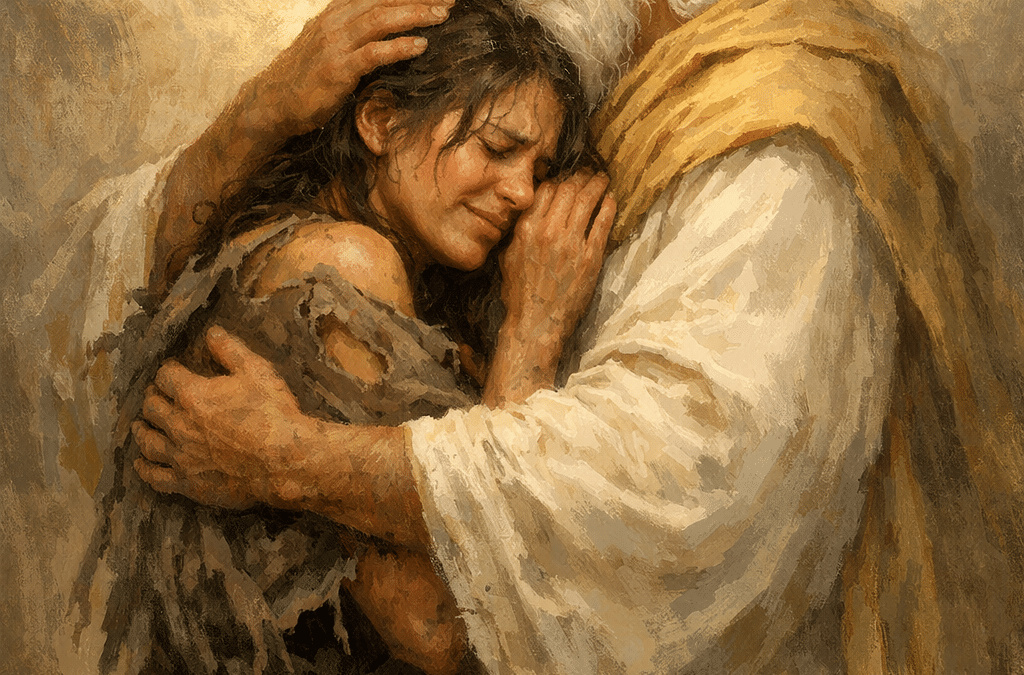
If we look at the Hebrew word Teshuvah, we find a profound definition: it means returning to one’s true self.
You might wonder, “What if my true self is evil?” If you think that, you are wrong—dead wrong. We were created for a relationship with a magnificent form of love: God Himself. To return to our true selves is to return to the Garden of Eden, walking in the cool of the evening with our Creator by our side. Teshuvah means turning back to God, not returning to our human tendency to sin.
The Tragedy of the Hide-and-Seek
When we look at Adam and Eve, we see a complete lack of repentance. Instead of turning toward God, they did two things:
- They hid. When God called out, “Where are you?” they claimed they were hiding because they were ashamed of their nakedness.
- They blamed. When God asked, “Who told you that you were naked?”, they refused to take ownership. Adam even had the nerve to blame God, saying, “The woman whom YOU gave to be with me… she gave me of the tree and I ate”.
https://gracielynne.com/who-told-you-that/
The first step in true repentance is to become totally naked before God—confessing sin and opening your heart for Him to cleanse it. God wasn’t looking for a culprit to crush; He was a heartbroken Father, yet a holy one, seeking to find out who had broken this cherished relationship.
The David Distinction: Justice and Mercy
How is this different from King David? David’s sins were heavy—adultery and murder—and he did not escape the consequences. But his “return” was different because he accepted God’s right to judge him.
While Adam and Eve used their words to build walls of defense, David used his words to tear them down. In Psalm 51, David doesn’t point at others or blame the pressures of the crown. He stands “naked” before God and cries out: “Against You, You only, have I sinned.”
David understood the “Honest Truth” of the Bible: God is a righteous Judge who cannot ignore sin, but He is also the only one who can provide the remedy. David didn’t run from the judgment; he ran to the Judge. He asked God to “Create in me a clean heart.” He wasn’t just asking for a pardon to avoid trouble; he was asking for a homecoming.
Reflection Questions
- Identifying the Voice: God asked Adam, “Who told you that you were naked?” Take a moment to listen to your internal dialogue. Are there voices of shame or condemnation telling you to hide from God? How do those voices compare to the “Honest Truth” found in the Bible? https://gracielynne.com/who-told-you-that/
- The “Naked” Truth: Adam and Eve used fig leaves and trees to hide their true state. What “fig leaves” are you currently using to cover your flaws or mistakes? (e.g., busyness, blaming others, or self-justification). What would it look like to stand “totally naked” and honest before God today?
- The David Approach: When confronted with his sin, David didn’t make excuses; he took full ownership. Is there an area in your life where you have been shifting blame like Adam, rather than seeking a “clean heart” like David?
- The Path of Return: Teshuvah is a return to your true self—the person God created to walk with Him in the garden. If you stopped running today, what is the first step you could take to “turn back” toward that magnificent form of love?