Few verses in Scripture are read as quickly—and reflected on as little—as the creation of woman in Genesis 2. We are told that God caused Adam to sleep, took a “rib,” and formed Eve. The story is familiar, but the Hebrew word behind “rib” opens a far richer, more relational, and even architectural meaning than we often realize.
The Hebrew Word We Translate as “Rib”
In Genesis 2:21–22, the word translated rib is the Hebrew: צֵלָע (ṣēlāʿ).
This word does not primarily mean a single anatomical bone. In Hebrew usage, ṣēlāʿ most often means:
- Side or Flank
- Supporting structure
- Architectural side panel
The same word is used throughout Scripture to describe the sides of the Tabernacle and the side chambers of the Temple—places of support, stability, and sacred nearness. Eve was not created from something incidental or expendable. She was formed from Adam’s ṣēlāʿ—his side, his supportive structure.
This matters profoundly.
Not From the Head. Not From the Feet. But From the Side.
Genesis is deliberate in its imagery, inviting meditation. As ancient commentators like Augustine of Hippo observed, the location of this “side-piece” was highly symbolic:
- Woman was not taken from Adam’s head—to rule over him.
- She was not taken from his feet—to be beneath him.
- She was taken from his side—to stand with him.
The Hebrew quietly communicates equality, companionship, and shared life. Woman is created to be alongside man, not above or below him, reflecting a divine design rooted in partnership.
The Rib and the Heart: A Sacred Enclosure
Beyond its structural meaning, the ṣēlāʿ (ribs) play a crucial physical role: they surround and protect the heart. In Hebrew thought (lev), the heart is not merely emotional, but the very center of one’s will, moral decision, and inner life—the core of who we are.
By taking from the structure that guards the heart, God reveals a profound truth about shared vulnerability and mutual guardianship. If the rib protects the heart physically, then symbolically, the text points to a divine intention for relationship: to live side by side is to be close enough to wound—and close enough to guard.
A Helper Like God Himself: ʿĒzer kĕnegdô
Genesis 2:18 describes woman as ʿēzer kĕnegdô, often translated “helper suitable for him.” This phrase is frequently misunderstood. ʿĒzer is a word most often used of God Himself as a helper—one who is strong, rescuing, and sustaining. The phrase does not imply subordination; it describes correspondence—a strength that stands face-to-face, equal and engaged.
Taken together, ṣēlāʿ (side) and ʿēzer kĕnegdô (corresponding helper) reveal a design rooted not in hierarchy, but in intimacy, mutual strength, and shared life.
The Body as Temple: From Creation to Indwelling
This ancient architectural language of the ṣēlāʿ in Genesis forms a stunning blueprint for a profound New Testament truth: our bodies are temples of the Holy Spirit (1 Corinthians 6:19).
- Architectural Presence: From the very beginning, the human body was “blueprinted” using the same language God would later use for His dwelling place on earth. We weren’t just made to exist; we were framed to be containers for the Divine Presence. The ribs are, in essence, the inner walls of this sanctuary, protecting the sacred heart.
- The Verb “Banah”: Genesis 2:22 states that God didn’t just “form” Eve; He “made” or “built” (banah) her from the rib. Banah is the same verb used for building houses and temples. This directly connects to Ephesians 2:22, where we are described as “being built together to become a dwelling in which God lives by his Spirit.” Eve was the first “temple” built from the side of another.
The Pierced Side: The Ultimate Fulfillment
The mystery of the ṣēlāʿ does not end in the Garden; it finds its ultimate fulfillment on a hill called Calvary.
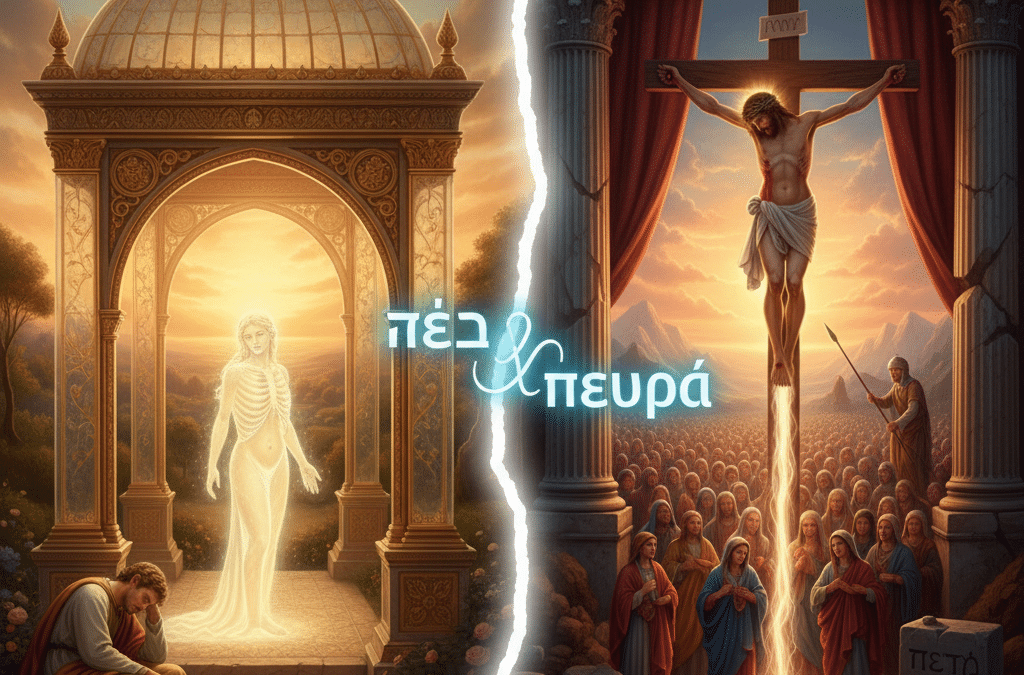
Just as the first Adam was laid into a deep sleep (a shadow of death) so that God might open his side to bring forth a companion, the Last Adam—Jesus—was laid into the sleep of death on the cross so that His side might be opened for us. From the wound in Christ’s side flowed water and blood—the very elements that birth and sustain His Bride, the Church. What God “built” in Genesis, He “rebuilt” at the Cross.
We are not just standing beside Him; we are born from Him, protected by His strength, and forever near to His heart.
A Quiet Truth to Hold
The creation of woman from man’s side reminds us that God values nearness, not domination or distance. He desires hearts that dare to live close enough to be known. This profound relational truth, woven into the very fabric of creation, is not a sign of weakness, but the courage of divine love.