In the story of Genesis, there is a contrast so stark it is like the difference between light and dark, calm and chaos, rest and labor. Before sin entered the world, Adam and Eve were vegetarians.
In Genesis 1:29-31 (NIV), the Bible states:
“Then God said, ‘I give you every seed-bearing plant on the face of the whole earth and every tree that has fruit with seed in it. They will be yours for food. And to all the beasts of the earth and all the birds in the sky and all the creatures that move along the ground—everything that has the breath of life in it—I give every green plant for food.’ And it was so. God saw all that he had made, and it was very good. And there was evening, and there was morning—the sixth day.”
It was an ecosystem that didn’t support violence or bloodshed. In Psalms 11:5, the New Living Translation says that “The Lord Examines both the wicked and the righteous and he hates those who love violence.”
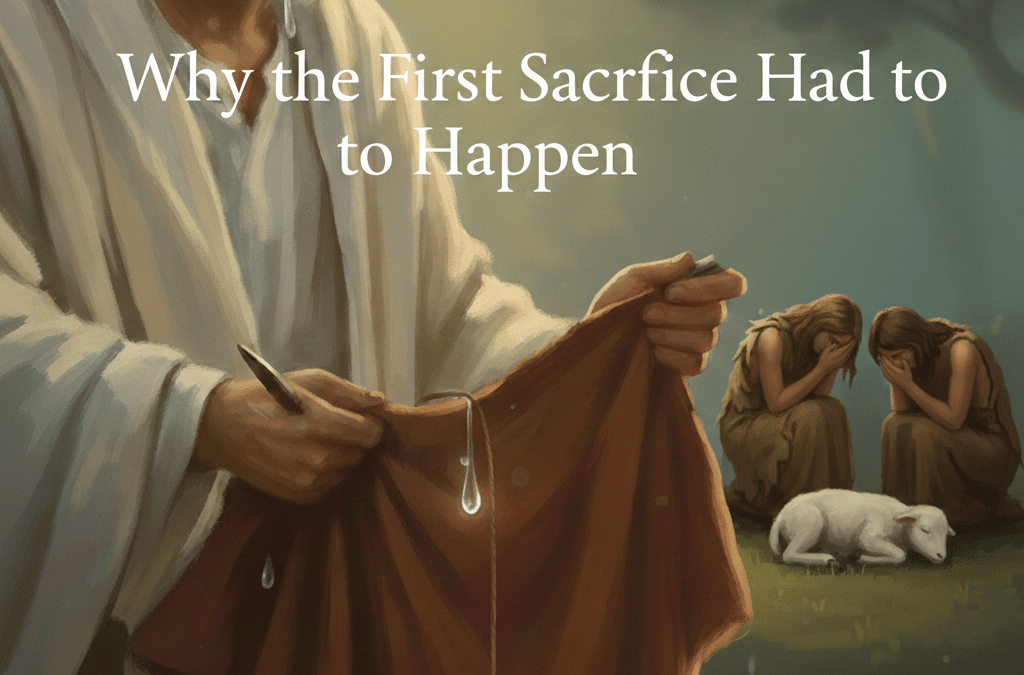
So, in the Garden of Eden, His initial creation called for no bloodshed. Yet, when humanity chose to disobey, they covered their shame with mere fig leaves. A sin as great as this would require much more than a fig leaf, for fig leaves shrivel quickly as soon as they are plucked from the tree.
So, God the Father, in His most tender and heartbreaking moment, did what He hated most. He created violence against an animal he had called good. This animal was most likely a gentle lamb. Why would he do that?
Sin isn’t just “making a mistake”; it is a destructive force that tears the fabric of the world. By requiring a sacrifice, God was saying:
“Look at how much it costs to fix what was broken. Look at the value of a life.”
It was a placeholder until the day He would say, “I won’t ask for the lamb anymore. I will BE the Lamb.”
“God did not demand a sacrifice because He was bloodthirsty; He provided a sacrifice because He was brokenhearted. He took the life of the innocent to cover the shame of the guilty, proving from the very first day that He would rather suffer the loss Himself than lose us forever.”