If Jesus signifies the Tree of Life, why was the Tree left behind in Eden?
Why was it guarded?
And why did God not simply invite humanity back to it?
To answer those questions, we must search scripture and the heart of God.
From the beginning, the Tree of Life was never hidden or secondary. “The tree of life was in the midst of the garden” (Genesis 2:9). Life stood at the center of God’s creation, freely offered, sustained by trust and intimacy with Him .But when sin entered, something changed.
After Adam and Eve ate from the tree of the knowledge of good and evil, God spoke words filled not with rage, but with grave concern: “Now, lest he reach out his hand and take also of the tree of life and eat, and live forever—” (Genesis 3:22). That unfinished sentence matters.
God stops Himself—not because He is cruel, but because eternal life in a broken world would not be mercy. To live forever with fear, shame, and broken trust would have sealed humanity into unending separation. Immortality without healing would have been like drinking poison and dying daily.
So, Scripture tells us, “Therefore the LORD God sent him out from the garden of Eden” (Genesis 3:23). And then comes the line that is so often misunderstood: “He placed the cherubim and a flaming sword… to guard the way to the tree of life” (Genesis 3:24).
The Tree of Life was not destroyed, it was guarded. Humanity was exiled as life itself was preserved. That distinction reveals God’s heart. God’s desire for life never changed. What changed was humanity’s capacity to receive it rightly. Innocence was gone. Trust was fractured.
Something more than fruit was now required. God did not call humanity back to the garden.He came to us instead.
The Gospel of John tells us, “In Him was life, and the life was the light of men” (John 1:4). Life was no longer rooted in a place—it was embodied in a person. Jesus would later say plainly, “I am the way, and the truth, and the life” (John 14:6).
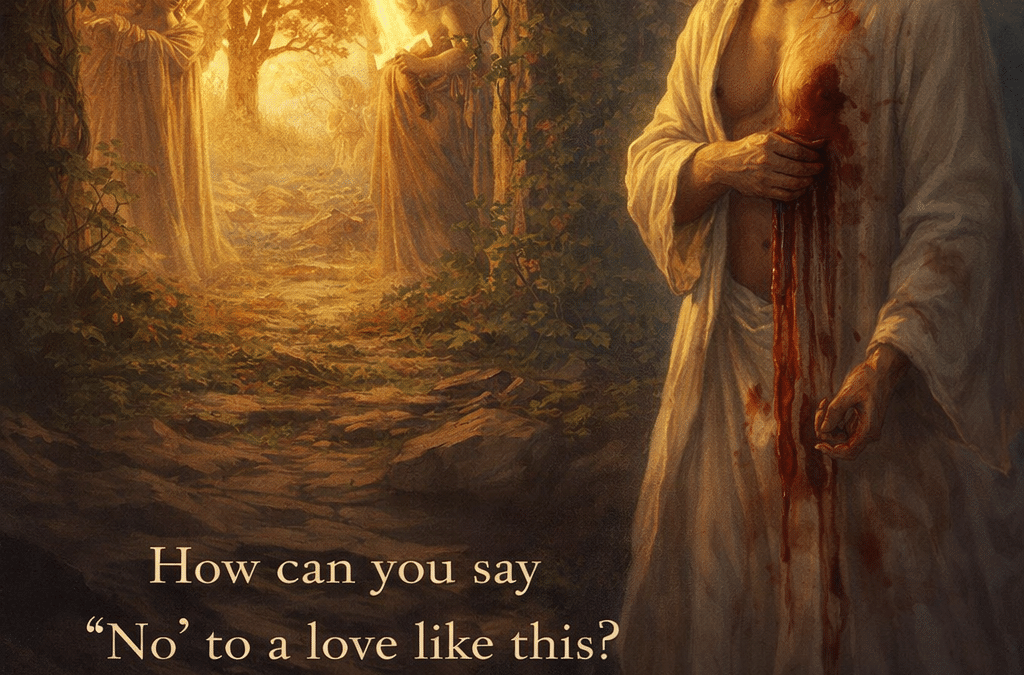
Jesus does not appear inside Eden. He appears outside it.He walks among the exiled. He meets humanity in the wilderness. What was once a guarded tree becomes a living Savior who can be touched, followed, trusted.
And then Scripture does something astonishing. When Jesus is crucified, the New Testament deliberately uses Eden language: “He himself bore our sins in his body on the tree” (1 Peter 2:24).
The sword that once guarded the Tree of Life does not strike humanity.It falls upon Christ.
Paul tells us, “Christ redeemed us from the curse… by becoming a curse for us—for it is written, ‘Cursed is everyone who is hanged on a tree’” (Galatians 3:13).
The guarded tree of Eden and the cross of Christ are not disconnected images. They are one unfolding story. Life was protected until love could restore us enough to receive it.
And Scripture does not end with a guarded tree. It ends with an open one.
In Revelation, Jesus promises, “To the one who conquers I will grant to eat of the tree of life, which is in the paradise of God” (Revelation 2:7). And in the final vision, the Tree of Life stands freely accessible again:“The leaves of the tree were for the healing of the nations” (Revelation 22:2).
The Tree of Life remained in the garden not because God withheld life—but because He was protecting humanity from eternal brokenness. Jesus is the Tree of Life who steps outside the garden, bears the sword, absorbs the curse, and restores access not through innocence reclaimed, but through love redeemed.
God did not close His heart in Eden. He opened a much longer road—one that leads, finally, back to life.
My question for you is this…
How can you not receive a love as great as this?
Top of Form